
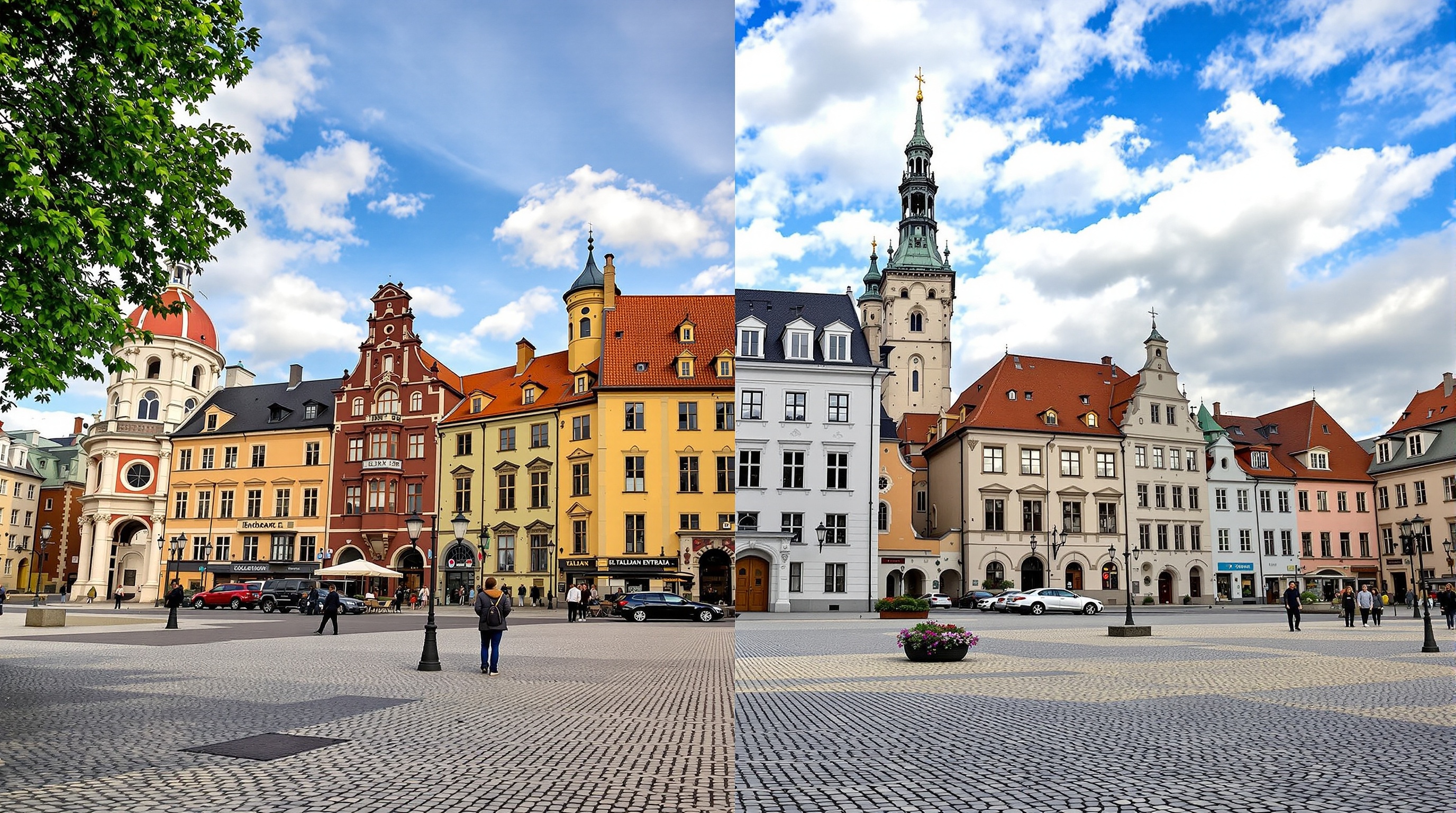
Riga vs Tallinn: Which Baltic Capital Offers Better Rental ROI?
Both Riga and Tallinn are exceptional short-term rental markets. Both are UNESCO World Heritage cities, both have strong tourism bases, and both are growing. But they're different markets with different risk/return profiles. Here's our honest comparison.
The Numbers Side by Side
| Metric | Riga | Tallinn |
|---|---|---|
| Avg. nightly rate | €95 | €112 |
| Peak occupancy | 92% | 93% |
| Annual avg. occupancy | 78% | 75% |
| Property price (central, per m²) | €2,200 | €3,100 |
| Gross yield (estimated) | 8.5% | 7.2% |
Tallinn wins on nightly rate and peak occupancy. Riga wins on annual average occupancy (less pronounced seasonality) and property price — which translates to better gross yield.
The Tallinn Case
Tallinn is the premium market. The Old Town is genuinely extraordinary — one of the best-preserved medieval city centres in Europe — and guests pay for the experience. Peak season rates of €150–€200/night are achievable for well-positioned properties.
The challenge is seasonality. Tallinn's winter is genuinely slow. January and February occupancy can drop to 55–60% even for excellent properties. If you're financing a purchase, you need to model the full year, not just the summer.
The other consideration is competition. Tallinn has a mature, professional short-term rental market. To compete at the top end, you need excellent photography, smart lock technology, multilingual listings, and professional management. The barrier to entry is higher than in Riga.
The Riga Case
Riga's Art Nouveau district is the star attraction — and it's a more consistent performer than Tallinn's Old Town because the demand is more evenly distributed across the year. Riga draws visitors for its architecture, food scene, and nightlife, and these attractions work in all seasons.
Property prices in Riga are meaningfully lower than Tallinn — €2,000–€2,500/m² in the Art Nouveau district versus €2,800–€3,500/m² in Tallinn's Old Town. This price advantage translates directly into better yields.
Riga also has a larger city (population 600,000 vs Tallinn's 450,000), which means more business travel demand and a deeper local economy supporting year-round occupancy.
Our Verdict
For maximum revenue per property: Tallinn. The peak season earnings are exceptional and the brand value of "Tallinn Old Town" is unmatched in the Baltics.
For best risk-adjusted returns: Riga. Lower acquisition costs, more consistent year-round occupancy, and strong fundamentals make Riga the more reliable investment.
For portfolio diversification: Both. The markets are complementary — Tallinn's summer peak and Riga's more even distribution balance each other well.
If we had to choose one for a first Baltic investment, we'd choose Riga's Art Nouveau district. The yield is better, the seasonality risk is lower, and the market has significant room to grow as international awareness of Riga increases.
But honestly? Both are excellent. The Baltic short-term rental market as a whole is one of the most compelling investment opportunities in European real estate right now.
Ready to maximize your Baltic property?
Get a free property assessment from our local team. No commitment, just honest advice.